
Ask for the actual wording proposed for the printed curtain
A printed-curtain care-text enquiry should identify the offer, request the supplier’s applicable wording or document reference and record its revision. Keep that response separate from a buyer-created care procedure. A catalogue image or material name does not independently establish how the product should be cleaned, washed, dried or treated. Leave missing wording unanswered rather than filling the gap with instructions that the source cannot support.
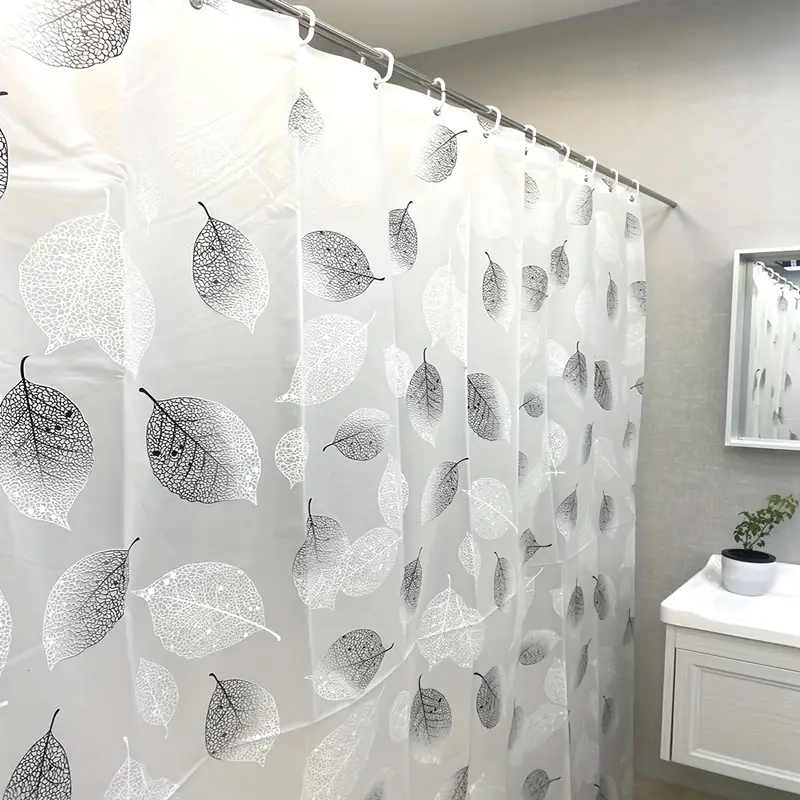
The official leaf-print curtain reference shows a patterned curtain suspended from rings on a straight rod in a bathroom scene. The arrangement identifies the catalogue enquiry but does not establish the exact material, printing process or supplied accessories. This guide concerns the source and scope of proposed care text. Approving the artwork layout and pattern reference remains a different purchasing task and does not confirm a care document or its physical inclusion.
Connect the document request to the actual offer
Send the exact printed-curtain product link and the supplier’s article or quotation reference. Ask whether any care wording, label or document is proposed for that offer. If one is supplied, retain its actual identifier or file reference. If the supplier provides only a general statement, preserve that scope rather than describing it as an article-specific document. Do not assume that a label exists or is attached to the product.
Keep the object and the wording distinct. A supplier may identify a file, describe a physical document or state that no reference has yet been provided. Each answer should be recorded as given. Receiving a file does not prove physical inclusion, and identifying a document does not independently validate its contents. A useful purchasing record shows what the answer actually covers without extending it to another curtain or an unconfirmed version.
Create a wording-to-offer record
Record field | Information to request | Boundary to preserve
Printed-curtain offer | Exact article or quotation version | Other prints or catalogue alternatives
Wording source | Actual supplier text or identifiable file | Buyer-authored care directions
Document reference | Identifier and revision if supplied | A label assumed to exist or be included
Scope statement | Which article the response covers | Every later version or material option
Unanswered question | A specific missing relationship | An invented treatment or performance conclusion
The record is useful even when some fields remain open. A supplier might identify the applicable document without answering whether it is physically included. Retain that result and request the missing relationship separately. Do not make every field look complete by copying a reference from a similar curtain, using a buyer template as supplied wording or inferring a care method from the appearance of the leaf pattern.
Preserve the supplier text when requesting a change
If the buyer proposes an edit, identify the exact wording and the version it would replace. Retain the original response as history. Do not silently remove qualifications or add a stronger instruction because it sounds clearer or more attractive. Ask for an attributable response that identifies the resulting version and the offer it covers. A suggested change remains a request until that relationship is established.
This enquiry supplies no cleaning, washing, drying, chemical-treatment or maintenance procedure. The photographed material appearance and catalogue terms should not be used to create one. Where the buyer needs clarification, state the missing question and request applicable supplier information. Do not infer print fastness, surface durability, material safety or waterproofness from an image or from the fact that a care-text reference has been selected.
Separate language requests and physical inclusion
If another language version is requested, identify it as a request and keep any returned versions distinguishable. Do not assume translation availability or that an unseen translation has the same scope as a selected file. Record the actual document and article relationship supplied. This guide does not provide regulatory labelling instructions or represent that a wording choice establishes compliance for any particular market.
Apply the same distinction to requested printing or packaging changes. A buyer’s label layout is a discussion input, not evidence that design, printing, relabelling or customization services are offered. Ask what the supplier actually proposes. Keep physical inclusion of an identified label or document separate from electronic file receipt and from any service terms. Neither the rod nor the rings in the product scene confirms a document or accessory inclusion specification.
Track revisions without reopening unrelated decisions
When a new wording reference arrives, identify the earlier version it replaces and the offer affected. Preserve both records. Ask which parts of the response are intended to change instead of assuming that a new filename updates every document or product option. A clarification about one wording field should not silently overwrite unanswered material, accessory or commercial questions that the supplier has not addressed.
Keep the artwork-layout record separate throughout. Selecting a leaf-print appearance or pattern reference does not establish care wording, and identifying a care document does not approve every print or material alternative. Before carrying the wording into an order discussion, check its article, revision and inclusion scope. Retain open questions about stock, quantities, price, services and delivery arrangements instead of treating a document-selection note as a complete supply agreement.
Frequently asked questions
Does the leaf-print product image establish a care method?
No. It is a catalogue reference. Request applicable supplier wording without deriving cleaning, washing, drying or treatment directions from the image, product name or an unverified material description.
Does receiving a file prove that a label is attached?
No. File identity and physical inclusion are separate questions. Ask which identified document or label, if any, forms part of the proposed offer and retain the actual response.
Can a care document from another curtain be reused automatically?
No. Ask the supplier to identify its applicability to the actual printed-curtain article and version. Similar appearance or shared catalogue terminology does not establish the document’s coverage.
Does selecting care text confirm print durability or waterproofness?
No. Document identification does not independently verify product properties, printing methods or performance. Keep any additional statement attributable to its actual source and scope.
Use the official leaf-print curtain reference to anchor the wording enquiry and contact the supplier with the exact unanswered fields. Catalogue scenes remain reference evidence rather than confirmed material, care, inclusion or performance specifications.
https://jghomeware.com/product/peva-shower-curtain-leaf-print-shower-curtain-bathroom-partition/
https://jghomeware.com/contact/
https://jghomeware.com/blog/